The Ultimate Gemini Smart Home Automation: AI Cameras Trigger Routines in 2026

Smart homes are about to get significantly smarter. In May 2026, Google unveiled one of its most ambitious updates to the Google Home ecosystem yet: Gemini smart home automation capabilities that allow connected security cameras to actually understand what they see—and trigger intelligent routines based on real-world visual events. This shift from simple motion detection to true scene understanding marks a major milestone in ambient AI.
Announced at Google I/O 2026 and rolling out to early access users across 19 countries beginning May 27, the new feature transforms passive camera feeds into active automation triggers. Instead of merely alerting you when a camera detects movement, Google’s multimodal AI can now interpret scenes, recognize context, and initiate complex smart home routines without any manual input from the user. The capability was first reported by ResTech Today as a landmark moment for consumer ambient intelligence.
Table of Contents
- What Is Gemini Smart Home Automation?
- How Camera-Based AI Automations Work
- Supported Devices and Availability
- The Future of Ambient AI in Smart Homes
- Frequently Asked Questions
What Is Gemini Smart Home Automation?
Gemini smart home automation represents Google’s push into ambient computing for residential spaces. Building on the Gemini for Home platform launched earlier this year, this update embeds Google’s advanced multimodal AI directly into the smart home workflow. The core innovation is scene understanding: rather than relying on basic pixel changes or infrared motion sensors, the system uses large language and vision models to comprehend what is actually happening in front of your cameras.
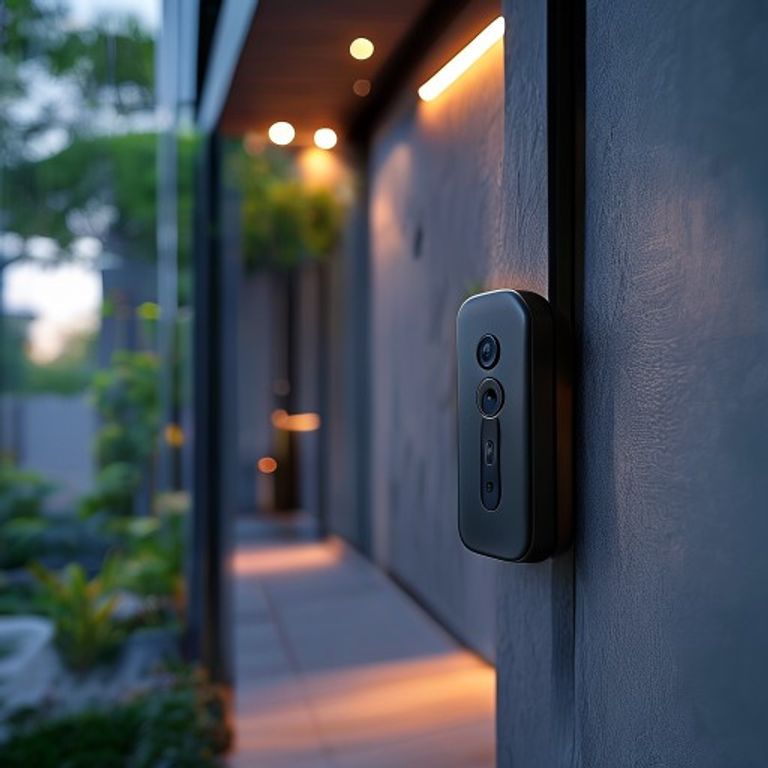
For example, a camera overlooking your driveway can now distinguish between a delivery driver dropping off a package, a family member arriving home, or an unfamiliar person lingering near your vehicle. Each scenario can trigger a different, contextually appropriate routine. The delivery driver might prompt a smart speaker to announce “Package at the front door,” while an unrecognized visitor could turn on floodlights and send a priority alert to your phone.
This contextual awareness is what separates ambient AI smart home technology from traditional rule-based automations. Older systems required users to manually configure countless if-then scenarios. Gemini’s built-in intelligence reduces this friction by handling the interpretation layer itself, turning raw video into actionable semantic events.
How Camera-Based AI Automations Work
The technical foundation of this rollout is Gemini’s advanced scene understanding, which processes camera footage in real time through Google’s secure cloud infrastructure. When a supported camera captures a scene, the AI smart home automation engine analyzes visual elements alongside temporal context to determine what is occurring and whether it matches criteria for a pre-configured routine.
Users enrolled in the Google Home Public Preview program can enable these features through the “Gemini for Home camera features” setting within the Google Home app. Once activated, the system allows other smart home devices to leverage camera-derived context as automation starters. This means your smart lights, locks, thermostats, displays, and speakers can all react dynamically to events as they unfold visually.
Consider these practical applications:
- Package protection: When your camera recognizes a delivery, it can automatically illuminate the porch, record a clip, and lock the front door after the driver leaves.
- Child safety: A backyard camera that detects a child near the pool can instantly sound an alarm on indoor speakers and flash exterior lights.
- Elderly care: Indoor cameras with privacy-compliant AI can detect falls or unusual inactivity and notify caregivers without requiring wearable devices.
- Pet management: The system can distinguish between your dog waiting at the door versus a stray animal in the garden, triggering only the appropriate responses.
Crucially, Google emphasizes that these automations operate within the company’s existing privacy framework. Video processing occurs through encrypted channels, and users maintain granular control over which cameras participate in AI routines and what data is retained.
Learn more about optimizing your smart home security systems with AI-powered cameras and sensors.
Supported Devices and Availability
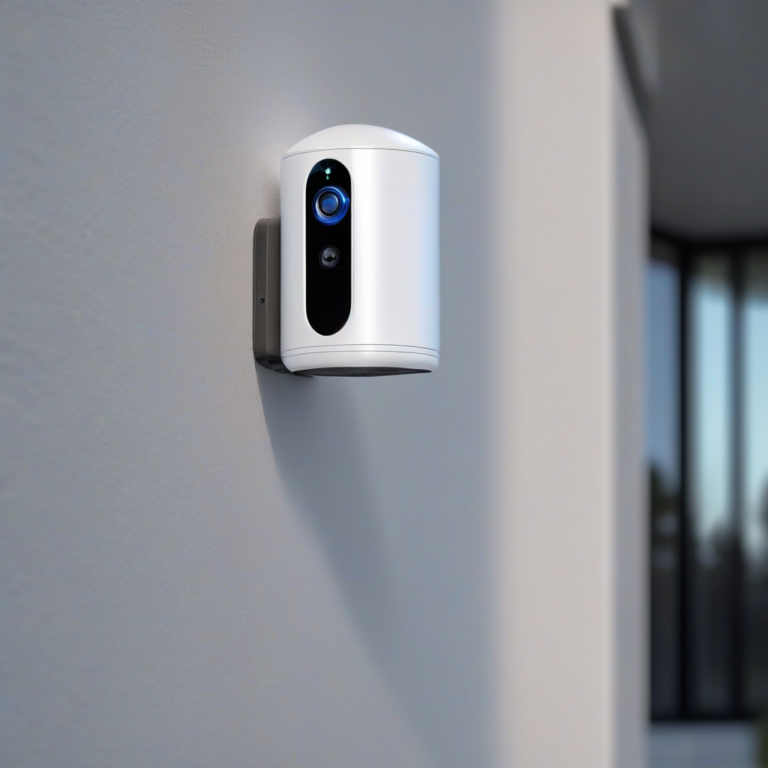
As of late May 2026, the feature is available for first-party Nest cameras as well as select third-party devices carrying the “Gemini Built-in” certification. One confirmed compatible device is the onn Outdoor Camera Plug-In, with Google I/O 2026 announcements indicating broader manufacturer participation is forthcoming as the certification program expands.
However, access is currently limited. The rollout is restricted to users in the United States who are enrolled in the Google Home Public Preview program, and the interface is available in English only. Additionally, activating Gemini smart home automation requires a Google Home Premium Advanced subscription, priced at $20 per month or $200 annually.
Google has confirmed deployment across 19 supported countries for early access participants, suggesting a phased global expansion throughout 2026. For the wider ecosystem, the company is actively working with hardware partners to simplify Gemini Built-in integration for both cameras and smart speakers, lowering the barrier for third-party manufacturers to adopt ambient AI capabilities.
Industry analysts expect that once the Public Preview restrictions lift and regional language support broadens, this functionality could become a standard expectation for new smart home installations—much like voice control did following the widespread adoption of virtual assistants.
The Future of Ambient AI in Smart Homes
Google’s camera-driven automations signal a broader inflection point for the smart home industry. The transition from motion-based triggers to semantic scene understanding places ambient AI smart home technology firmly in the mainstream conversation. Rather than homeowners programming rigid schedules or simple sensor thresholds, future environments will adapt fluidly to the people, objects, and activities present within them.
This advancement also intensifies competition among major platform holders. Amazon’s Alexa and Apple’s HomeKit have both pursued visual intelligence features, but Google’s deep integration of multimodal AI across its hardware and cloud services gives it a notable advantage in contextual comprehension. The ability to process natural language queries about camera footage while simultaneously executing automations creates a unified experience that competitors will be pressured to match.
Looking ahead, we can anticipate several evolutionary paths:
- Deeper multimodal fusion: Cameras will combine with audio recognition, environmental sensors, and wearable data to build richer situational models.
- On-device inference: As edge AI chips become more powerful, more processing may shift locally to reduce latency and enhance privacy.
- Proactive maintenance: Camera AI could monitor home infrastructure—detecting water leaks, HVAC issues, or electrical anomalies before they escalate.
- Energy optimization: Scene-aware automations will fine-tune lighting, climate, and appliance usage based on real occupancy patterns rather than scheduled guesses.
The arrival of Gemini smart home automation is not merely an incremental software update. It redefines the camera from a passive monitoring tool into an active, intelligent participant in daily household operations. For homeowners, integrators, and technology enthusiasts, May 2026 will be remembered as the moment ambient AI stopped being a theoretical promise and started reacting to the real world in real time.
As Google expands language support, regional availability, and hardware partnerships throughout the remainder of 2026, the question is no longer whether AI will manage our homes, but how quickly consumers will expect every connected camera to understand exactly what it sees.
Frequently Asked Questions
Q: What is Gemini smart home automation?
A: Gemini smart home automation is Google’s latest AI-powered feature that enables security cameras to interpret visual scenes using multimodal AI, automatically triggering context-aware routines based on what cameras see—such as recognizing a delivery driver and illuminating the porch.
Q: Which cameras support Gemini smart home automation?
A: As of May 2026, supported devices include first-party Nest cameras and select third-party devices with “Gemini Built-in” certification, including the onn Outdoor Camera Plug-In. Google plans to expand supported hardware throughout 2026.
Q: How much does Gemini smart home automation cost?
A: The feature requires a Google Home Premium Advanced subscription priced at $20 per month or $200 annually. It is currently available in the United States for users enrolled in the Google Home Public Preview program.